Learn System Design the Structured Way
The Ultimate Platform to Learn and Practice System Design Interviews

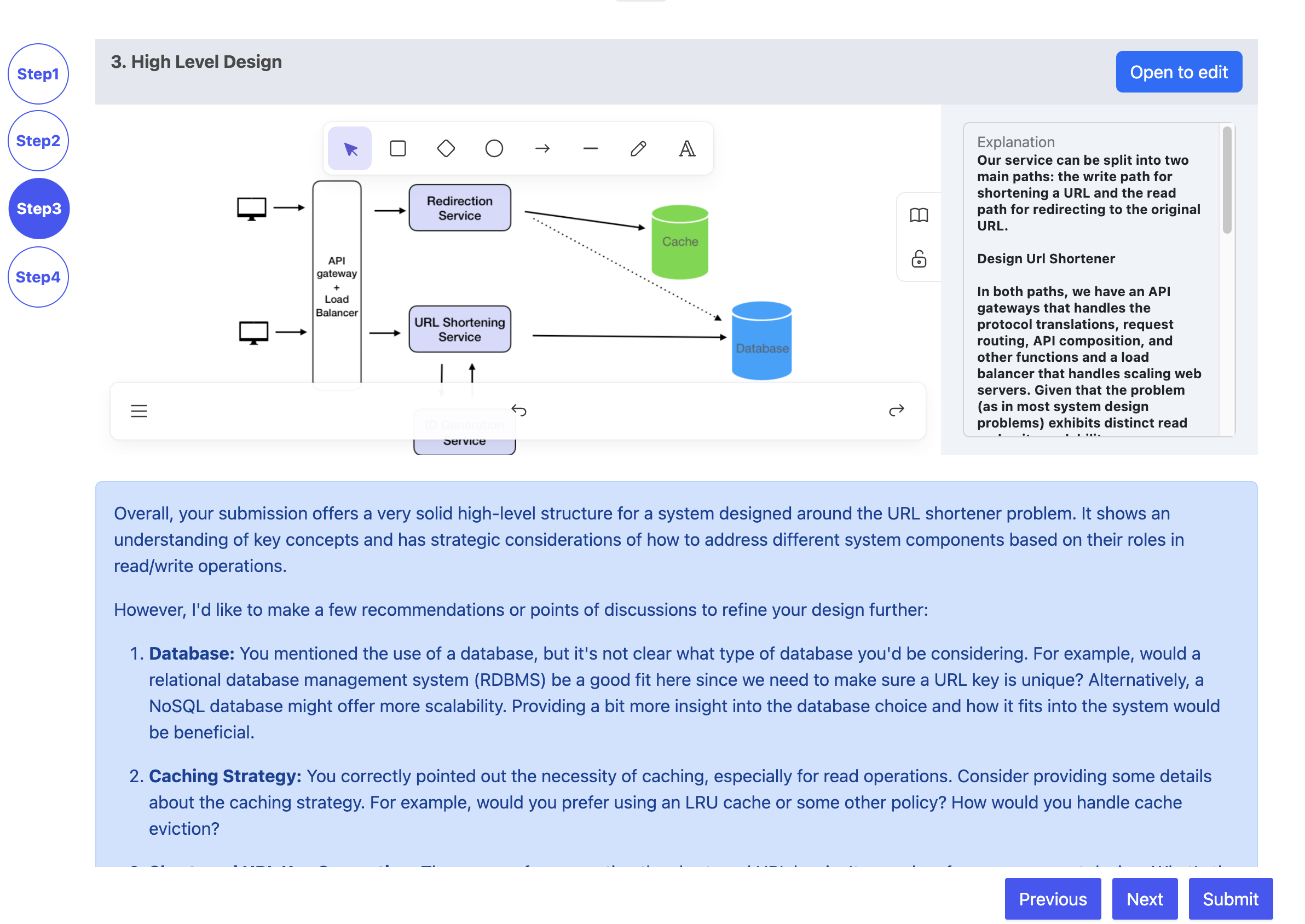
Practice System Design Questions and Get Feedback
"An ounce of practice is worth more than tons of preaching." — Mahatma Gandhi
Put this wisdom into action with our revolutionary platform. Don't just read about system design—practice it, refine it, and master it through actionable feedback.

Free Tools
Use these tools while you study. They are free for every reader.
Structured Learning
"Give a person a fish, and you feed them for a day; teach a person to fish, and you feed them for a lifetime." - Lao Tzu, Chinese philosopher
We don't just hand you solutions
we equip you with a conceptual toolkit to solve problems yourselves —-not just the ones we discuss.


Common Patterns, Unlimited Applications
No more reinventing the wheel for each unique challenge. Utilize our comprehensive design templates that act as a powerful foundation for solving a multitude of issues.
Real-World Code Examples
"Talk is cheap, show me the code." - Linus Torvalds, creator of Linux
Don't just read about it; experience it. Our platform offers not just blog-post theories but actual code snippets and examples that you can pull and run on your machine.
Dive into our 'Codelabs' for hands-on understanding
Forget convoluted setups; complex examples comes wrapped in a Docker container that you can easily clone and execute. This bridges the gap between theory and real-world application, making your learning journey as frictionless as possible.
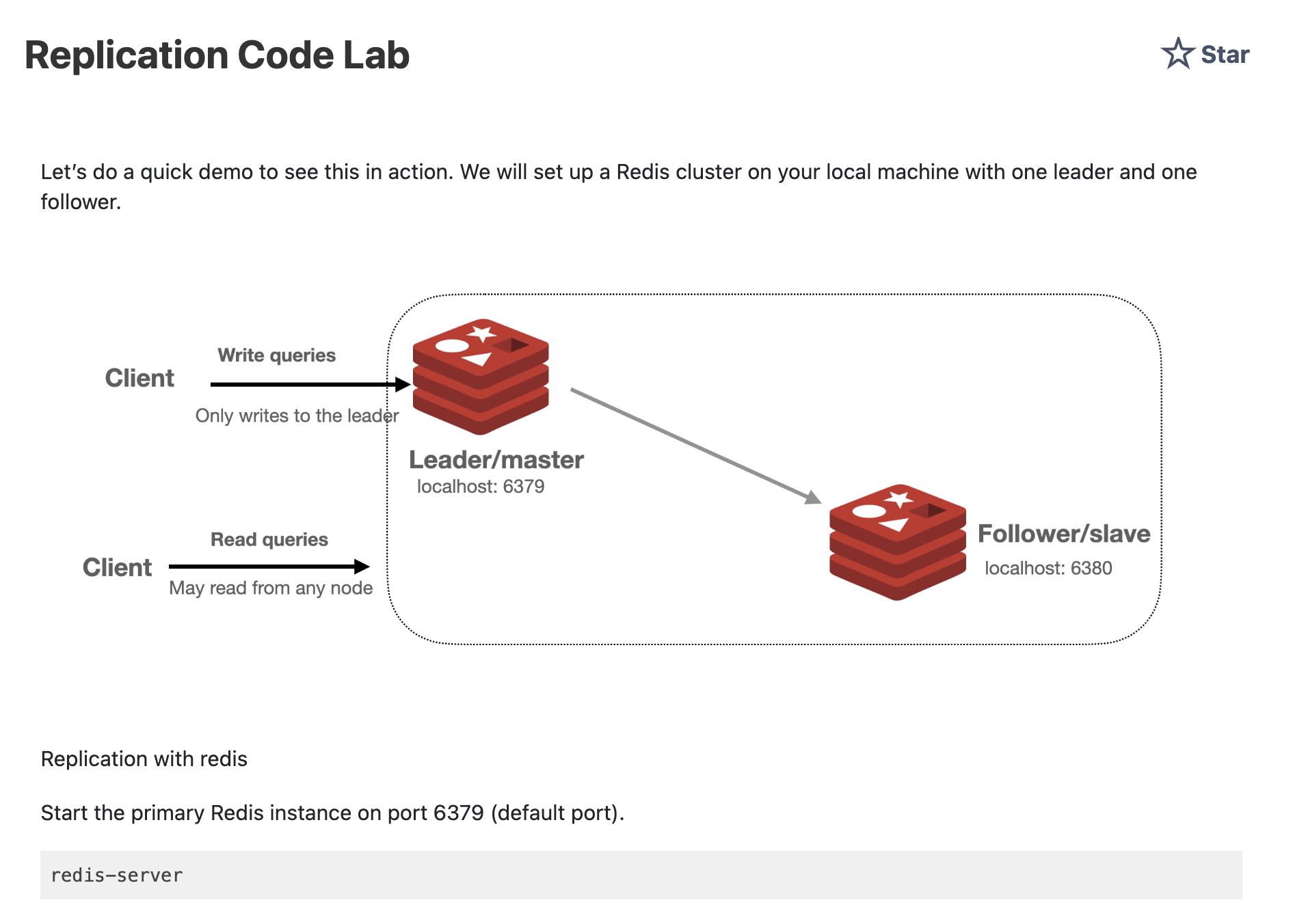
So yeah, it's pretty awesome. But don't just take our word for it. Try a practice problem!
Design YouTube
Design a video platform where users upload videos and a global audience streams them. The hard parts are the transcode pipeline and delivery economics — serving video is an egress-bound problem measured in exabytes.
- Upload a video → it is transcoded and becomes watchable.
- Watch a video with ABR → smooth across connections, with seeking supported.
Design a News Feed
Design the home feed for a social product — a ranked, near-real-time stream of posts from followed accounts. The hard parts are fan-out and ranking, and they are coupled.
- Post text plus optional media references; the post becomes retrievable and eligible for followers' feeds.
- Read a ranked, paginated home timeline of recent posts from followed accounts.
- Follow / unfollow an account, which changes what appears in the follower's feed.
- Record engagement — likes, reshares, views — as signals the ranker uses as features. Recording the event is in scope; the high-throughput engagement store that counts those events is a separate problem, treated here as an existing service the ranker reads.
Design Uber / Nearby Drivers
Design the core of a ride-hailing service — drivers stream location, riders find and match a nearby driver. The twist is that it is write-heavy; the location index takes a firehose of updates, far more than the rider-request reads.
- Update location — updateLocation(driverid, lat, lng), very high frequency.
- Find nearby drivers — given a rider's location, return available drivers within a radius.
- Match — assign one driver to a request and prevent double-assignment.
- Driver availability — online / offline / on-trip state.
Design Instagram
Design a photo-sharing service — upload images, follow accounts, and see a timeline of recent posts. The read path is a News Feed variant; the new problem is the media write path — upload, transcode, durable blob storage, and CDN delivery.
- Upload a photo with caption and location; it becomes visible to followers once processed.
- View a timeline — recent posts from followed accounts, paginated.
- View a profile — a user's own grid of posts.
- Follow / unfollow an account, which changes what appears in the follower's feed.
Design Typeahead / Autocomplete
Design the suggestion service behind a search box — as a user types, return the few most-relevant completions of their prefix faster than the next keystroke. The hard part is ranking a huge corpus inside a per-keystroke time budget.
- Suggest. Given a prefix, return its top-K completions (default K = 10) ranked by
- Rank by popularity. Ordering reflects how often each completion is searched, refreshed
- Ingest signals. Take in the search and click events that popularity is computed from.
Design a Distributed Rate Limiter
Distributed rate limiter system design for API requests, including atomic counters, token buckets, sliding windows, multi-region coordination, and failure behavior.
- Decide allow or deny synchronously for each (key, action) pair.
- Configure limits per key, varying by API tier, endpoint, and tenant.
- Enforce multiple windows per key. A key often has a per-second and a per-day limit; deny on the tighter binding constraint.
- Surface state. On allow, return remaining quota and reset time; on deny, return enough for the gateway to send a 429 with Retry-After.
Design YouTube
Design a video platform where users upload videos and a global audience streams them. The hard parts are the transcode pipeline and delivery economics — serving video is an egress-bound problem measured in exabytes.
- Upload a video → it is transcoded and becomes watchable.
- Watch a video with ABR → smooth across connections, with seeking supported.
Design a News Feed
Design the home feed for a social product — a ranked, near-real-time stream of posts from followed accounts. The hard parts are fan-out and ranking, and they are coupled.
- Post text plus optional media references; the post becomes retrievable and eligible for followers' feeds.
- Read a ranked, paginated home timeline of recent posts from followed accounts.
- Follow / unfollow an account, which changes what appears in the follower's feed.
- Record engagement — likes, reshares, views — as signals the ranker uses as features. Recording the event is in scope; the high-throughput engagement store that counts those events is a separate problem, treated here as an existing service the ranker reads.
Design Uber / Nearby Drivers
Design the core of a ride-hailing service — drivers stream location, riders find and match a nearby driver. The twist is that it is write-heavy; the location index takes a firehose of updates, far more than the rider-request reads.
- Update location — updateLocation(driverid, lat, lng), very high frequency.
- Find nearby drivers — given a rider's location, return available drivers within a radius.
- Match — assign one driver to a request and prevent double-assignment.
- Driver availability — online / offline / on-trip state.
Design Instagram
Design a photo-sharing service — upload images, follow accounts, and see a timeline of recent posts. The read path is a News Feed variant; the new problem is the media write path — upload, transcode, durable blob storage, and CDN delivery.
- Upload a photo with caption and location; it becomes visible to followers once processed.
- View a timeline — recent posts from followed accounts, paginated.
- View a profile — a user's own grid of posts.
- Follow / unfollow an account, which changes what appears in the follower's feed.
Design Typeahead / Autocomplete
Design the suggestion service behind a search box — as a user types, return the few most-relevant completions of their prefix faster than the next keystroke. The hard part is ranking a huge corpus inside a per-keystroke time budget.
- Suggest. Given a prefix, return its top-K completions (default K = 10) ranked by
- Rank by popularity. Ordering reflects how often each completion is searched, refreshed
- Ingest signals. Take in the search and click events that popularity is computed from.
Design a Distributed Rate Limiter
Distributed rate limiter system design for API requests, including atomic counters, token buckets, sliding windows, multi-region coordination, and failure behavior.
- Decide allow or deny synchronously for each (key, action) pair.
- Configure limits per key, varying by API tier, endpoint, and tenant.
- Enforce multiple windows per key. A key often has a per-second and a per-day limit; deny on the tighter binding constraint.
- Surface state. On allow, return remaining quota and reset time; on deny, return enough for the gateway to send a 429 with Retry-After.